Artist Feature — Rebecca Jack, Atlanta, Georgia
The Question Her Work Asks of You
Rebecca Jack approaches her work with a discipline she built from scratch, painting intuitive, figure-filled canvases meant to teach you more about yourself than about her.

Rebecca Jack
Rebecca Jack grew up observant and quiet in a house where her mother had a practice of making everything beautiful: flowers on the table, rooms arranged just right. From there, her life moved through design work, motherhood, and years of starting and stopping paintings. She talks about that period as necessary growing pains with an ever-present pull familiar to anyone who knows they have a calling and keeps circling it instead of stepping in.
A jolt came when she started reading a book called Daily Painting. It was the reminder she needed to honor her practice in whatever capacity she could, be it shorter sessions, smaller works, or showing up in the time she had. Little by little she immersed herself into her work and watched her practice take shape.
Now, four years into full-time painting in Atlanta, she works almost daily, letting fictional figures surface through intuition, muscle memory, and feeling. Beneath every canvas sits a question she has been asking her whole life: who am I in relation to everything around me?
She hopes viewers feel a brief pause inside themselves when in the presence of her work as her works, she puts it, is meant to reveal something more about the person standing in front of it than it is about herself.
In the Artist's Words
Where do you feel your story as an artist truly begins?
As a young girl, I was shy and observant. I was curious, sensitive and a dreamer. Intuitively, I loved painting and drawing from an early age. I felt the most free when I was expressing myself through art. High school was the first time I felt an awareness that painting was something I was good at and perhaps there was something more to explore.
I felt an awareness that painting was something I was good at and perhaps there was something more to explore.
— Rebecca Jack
What early experiences or environments shaped the way you see the world?
My mother is an artist and fostered creativity at home. She loves beauty and was constantly creating and designing our home, paying attention to details such as having flowers around or setting the table in an aesthetically pleasing way. She exposed us to a variety of different cultural events. We went to museums, exhibits, theatre and dance performances.
Who were the people, places, or moments that formed your sense of self?
Between the ages of four and seven, we lived in a close-knit community in a small town in Alabama. It was a simple way of living that I look back on fondly and I was content there. I walked to school and rode my bike everywhere. All the neighbors gathered at the community center after school and work to socialize, swim and play tennis. My kindergarten teacher, Mrs. Turney, gave me a handmade paper crown for reading one hundred books. It is my first memory of feeling a sense of pride and accomplishment. We ended up moving to Tennessee shortly after. The transition of going to a new city and school was exciting but I also felt a sense of unsteadiness trying to navigate new situations. I think I'm still trying to get back to the carefree girl in Alabama.
I think I'm still trying to get back to the carefree girl in Alabama.
— Rebecca Jack
What parts of your identity feel most present in your creative life?
I am reflective and curious about internal states of being and connection to one's higher self. I love observing people interacting and the way they embody energy and emotions with their body language.
What questions or themes have followed you throughout your life, even before you made art?
I have always leaned into self-improvement books and any information on understanding the self better. I love reading and listening to anything about spirituality, emotional, physical, and psychological health.
How have your lived experiences influenced the way you move through the world as an artist?
It is inevitable that life throws you a curve ball you weren't expecting. I try to keep moving forward, set goals but be ready for anything. Staying flexible, open-minded and knowing that there are ups and downs and a season for everything. Stay the course and keep learning and growing.
Is there a moment or chapter in your life that changed your relationship to making?
Yes. I was in my mid-forties and frustrated that I was not able to gain any traction with my art career. I was a busy mom juggling life and my job as a designer. I was struggling to find large chunks of time to paint and I was not consistent in my studio practice. I was always starting and stopping paintings, not really completing anything. It wasn't until I read a book called Daily Painting that shifted my mindset and got me to go into my studio on a regular basis even when I didn't feel like it. By painting smaller pieces and blocking in shorter sessions I was able to get the consistency needed to actually move the needle. Changing my mindset and then taking action towards my goal got me on the right path and things got going from there.
I spent years not making and I felt a loss and disconnection that I couldn't put my finger on.
— Rebecca Jack
What experiences outside the studio feel essential to understanding your work?
Outside the studio, life is in motion through relationships, observations, thoughts, conversations, emotions and the mundane, ordinary moments.
What do you return to — emotionally, spiritually, intellectually — when you create?
Getting into a good headspace where I'm not thinking anything and staying connected to the work.
How does your background or community show up in your practice, even in subtle ways?
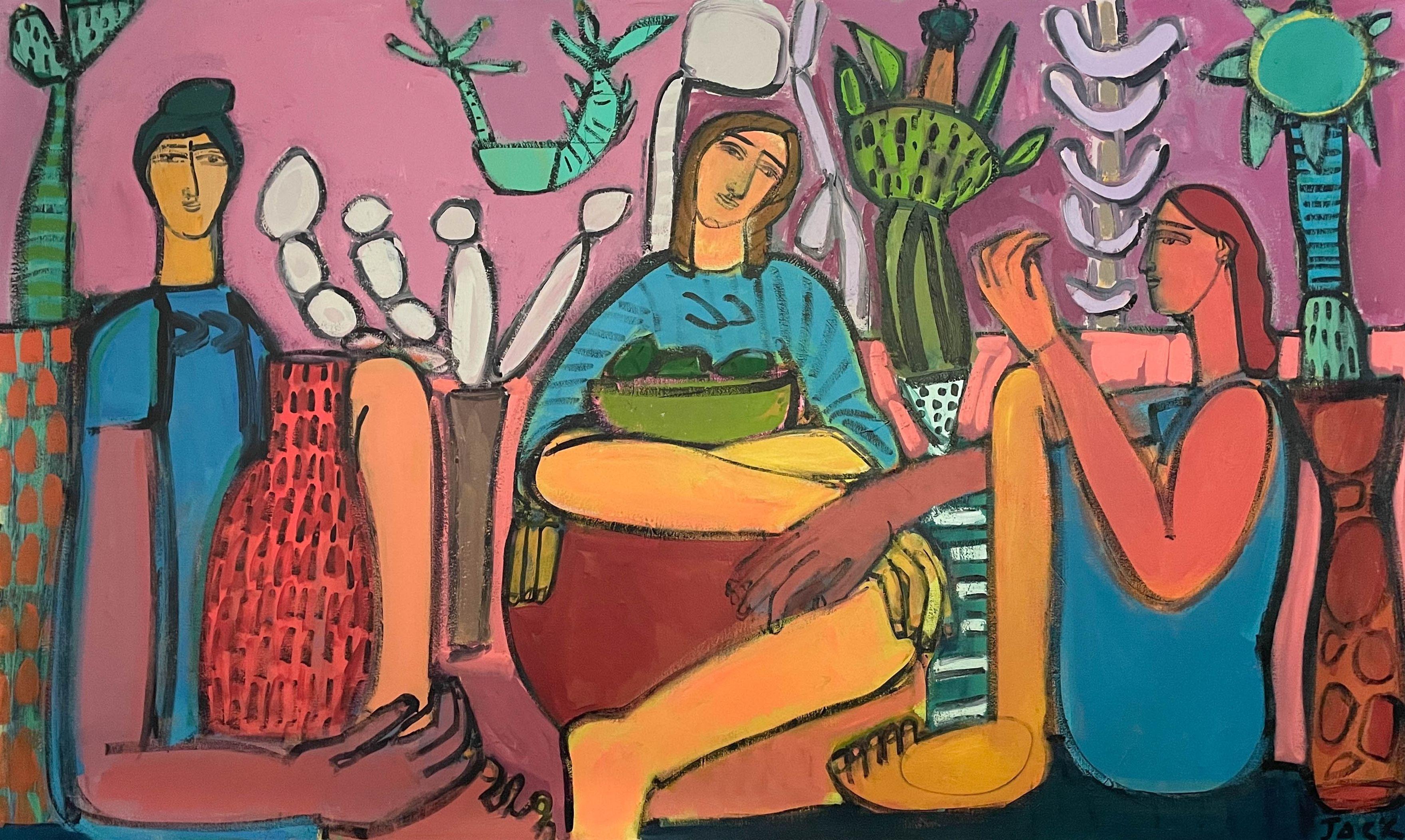
I have a background in interior design and while I don't work in design anymore I still love interior spaces. The colors and forms and spatial relationships all inform my work.
How would you describe your practice today, and how has it evolved over time?
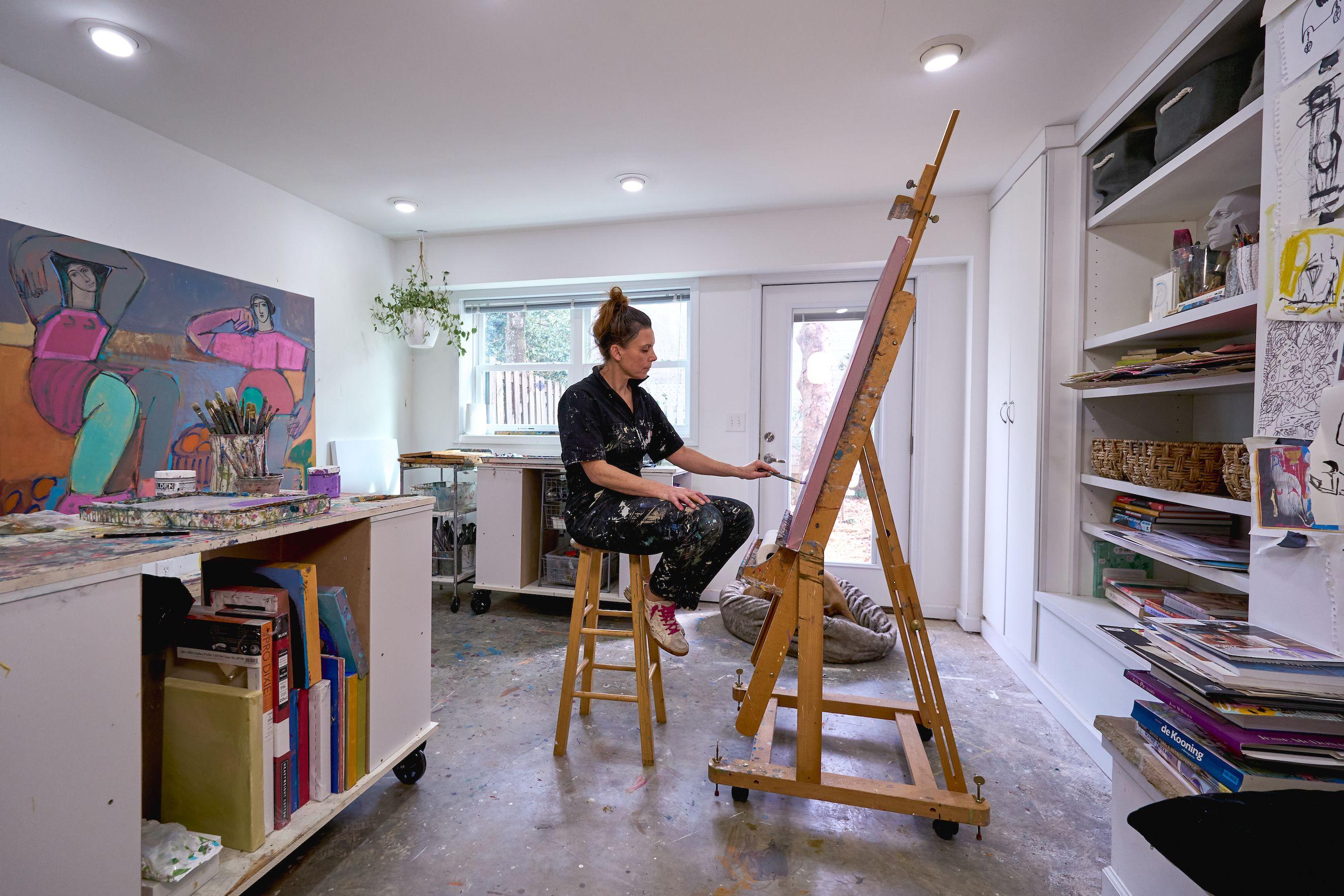
I have become more disciplined and committed to creating on a daily basis because I know now how important creating work is to my well-being.
What materials or techniques feel most like "home" to you, and why?
Painting in oils and acrylics on canvas with a brush feel the most comfortable probably because I use them often. In the past couple of years I have been experimenting with collage, other painting tools and techniques, and even dipping my toe into sculpture.
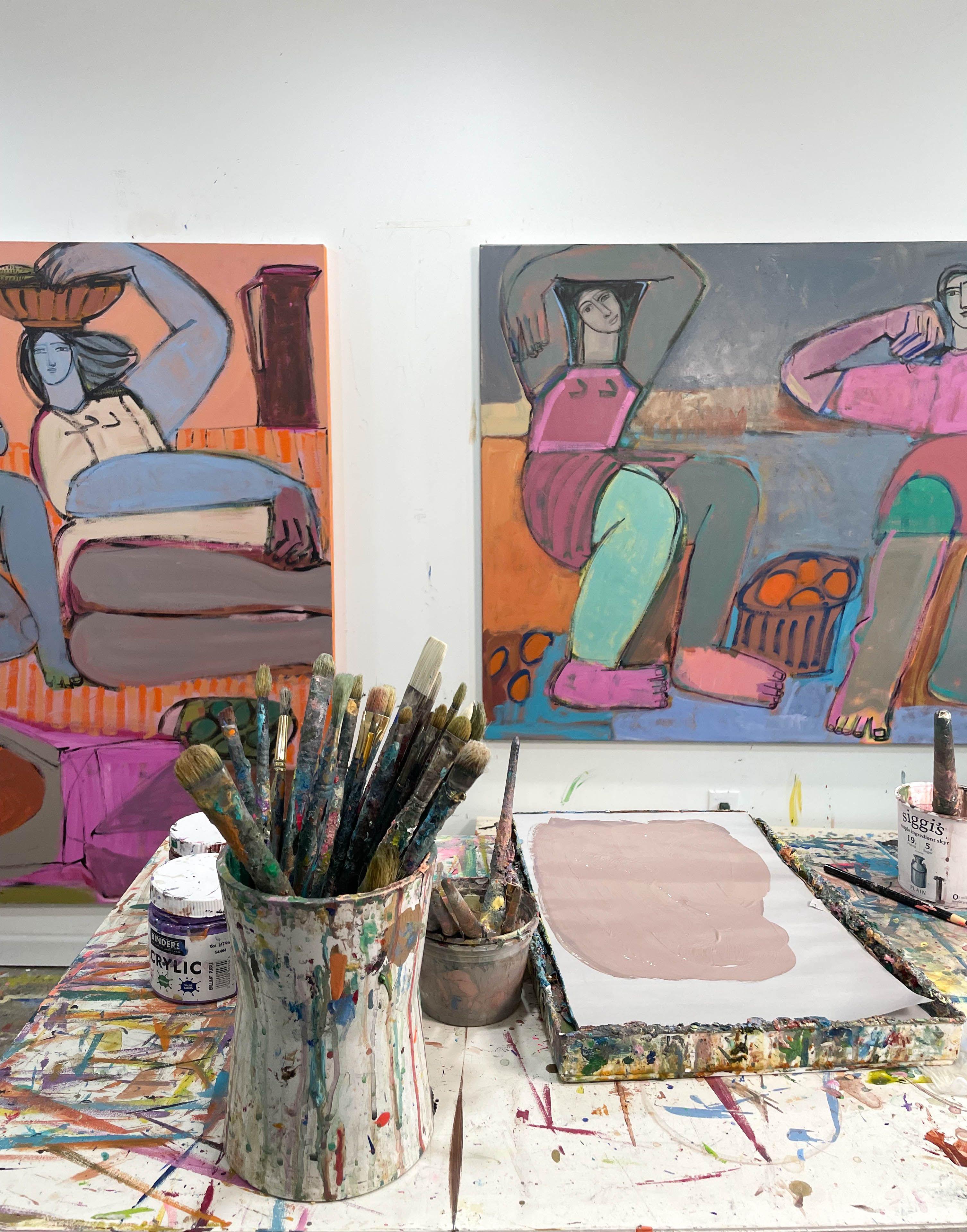
What does your process look like — slow, intuitive, research-driven, ritualistic?
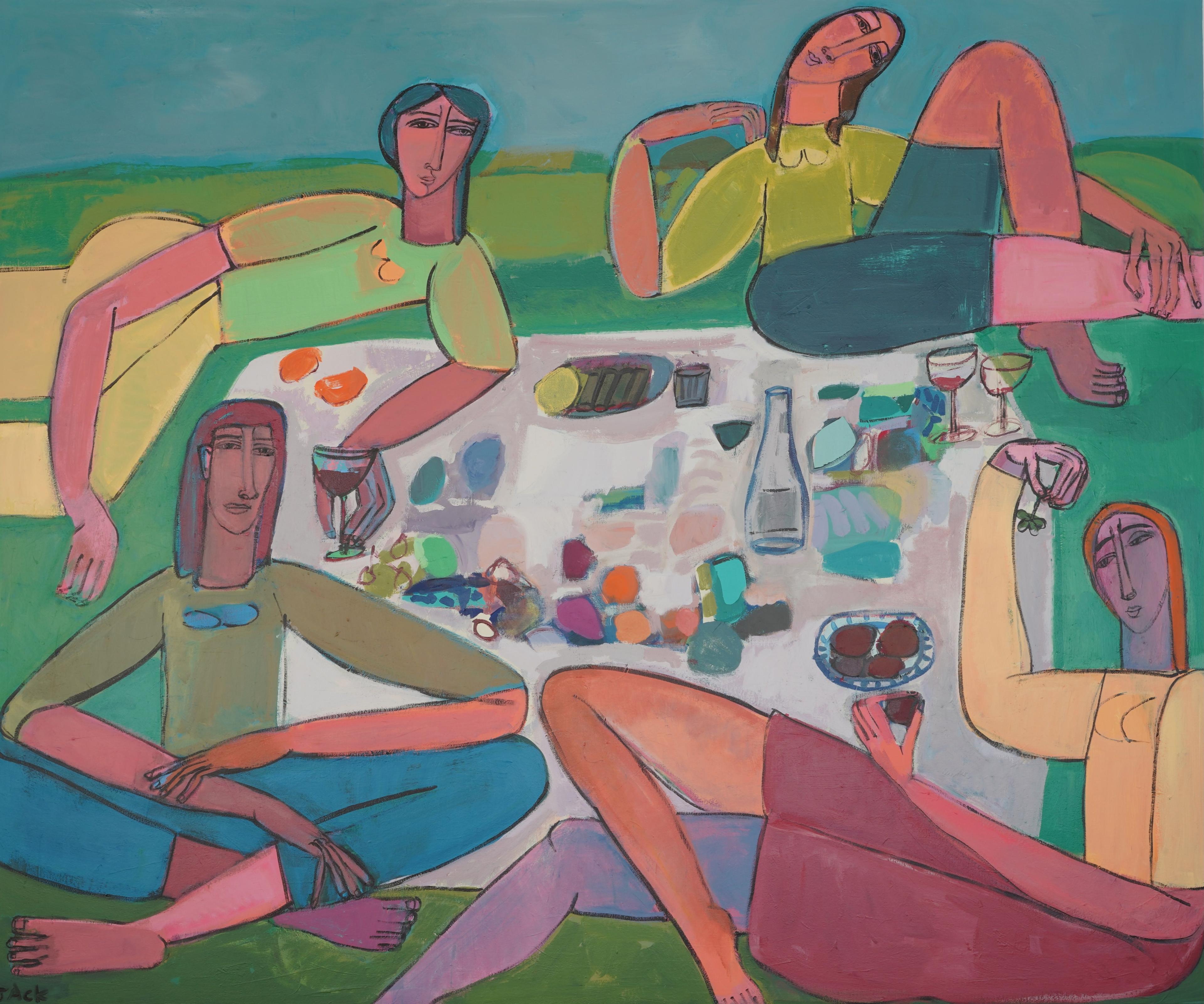
My process is intuitive and abstract. I allow a story to develop as I go along with no pre-planned sketches or ideas. My figures are fictional characters in a story. Up until now I have been using muscle memory from figure drawing classes or portrait painting to inform my figures. However, I am considering bringing in more reference material to experiment with. Painting every day or almost every day is important to stay connected to the process and flow. I typically work on several pieces at once in varying stages.
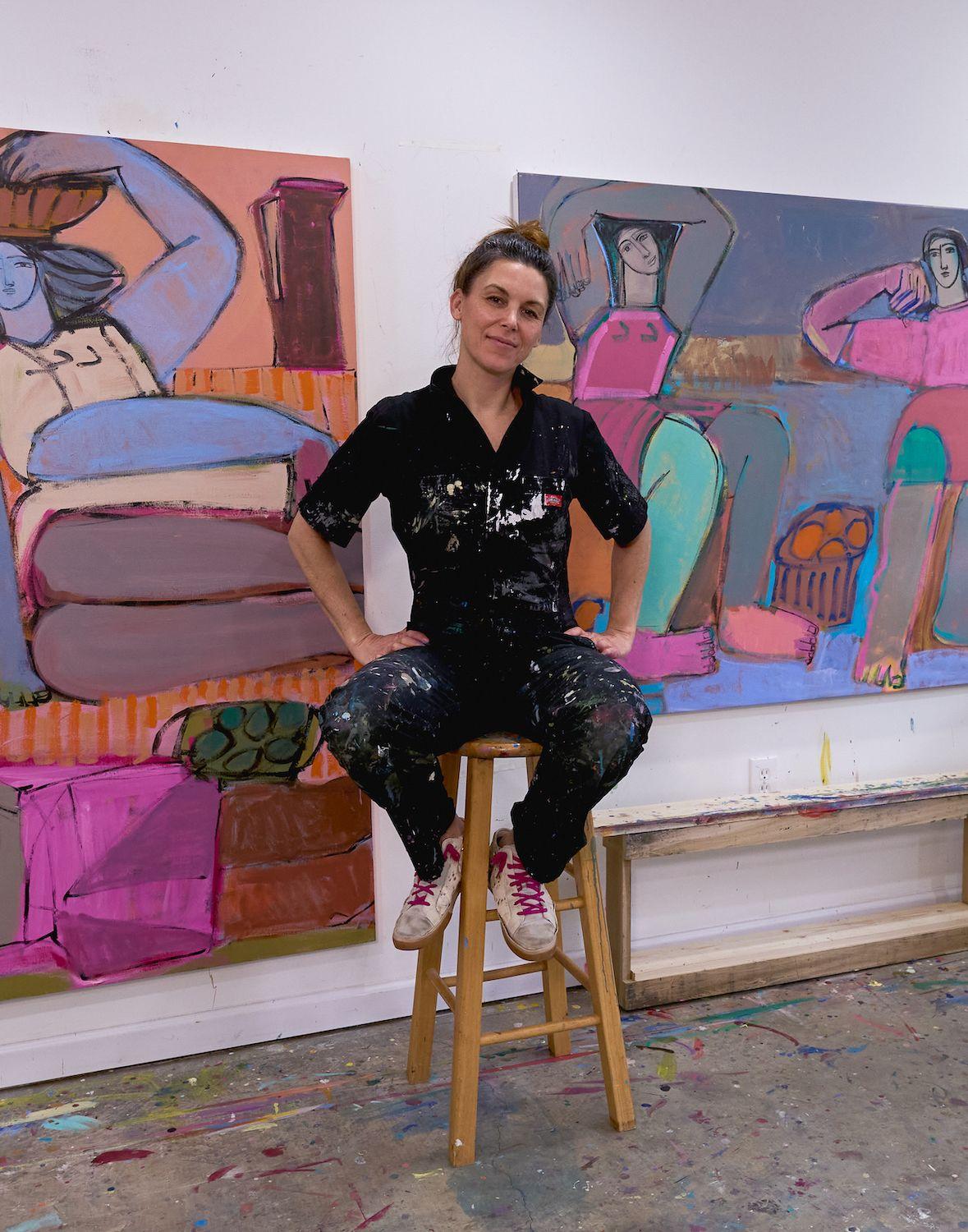
What role does experimentation or play have in your work?
I am always trying to push my work further. Play and experimenting are imperative to new ideas coming through. Working in a sketchbook or on small works on paper lowers the pressure to perform, allowing the mind to relax and just play.
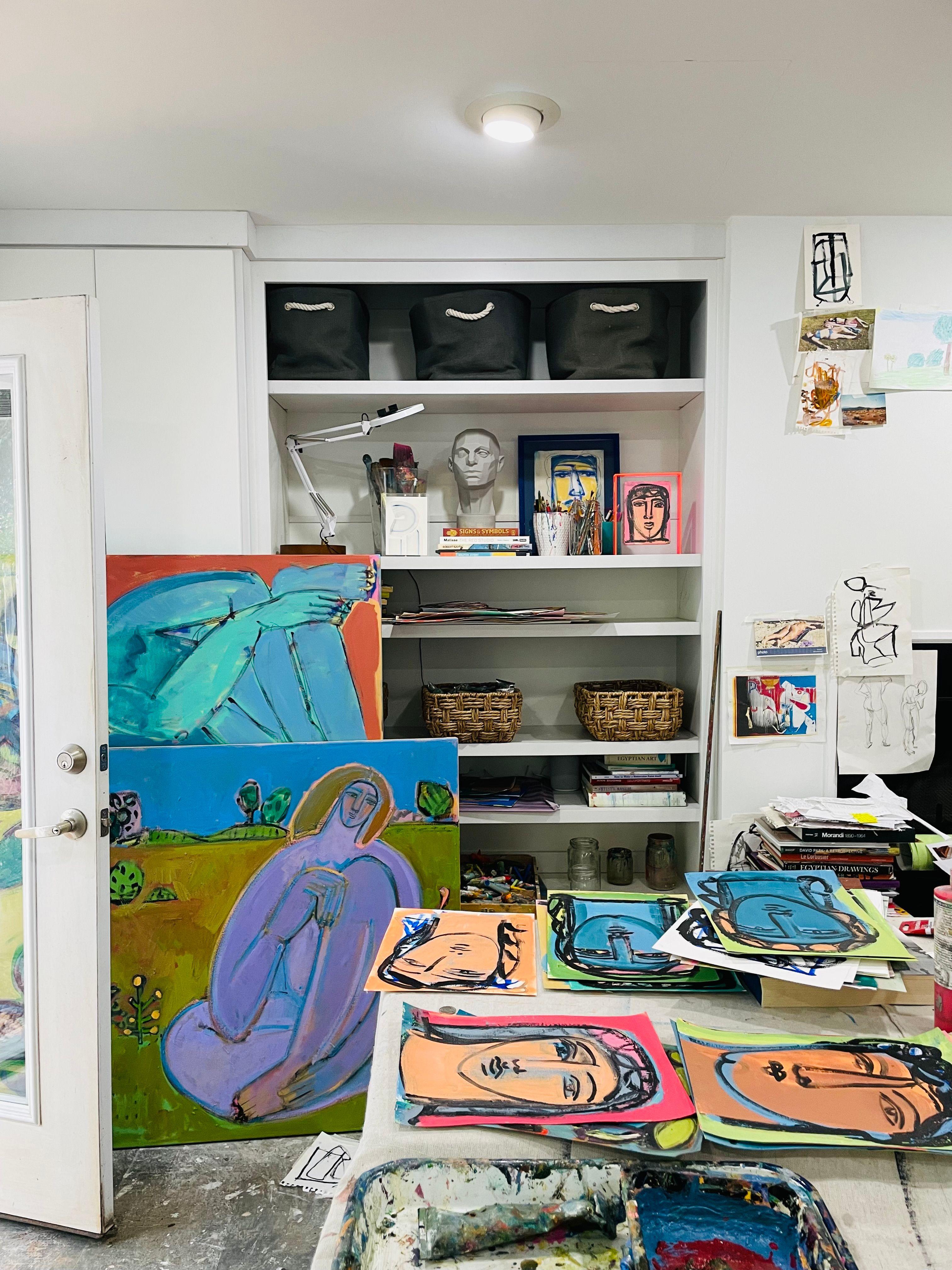
What are three adjectives you would use to describe yourself? Are these the same you would use to describe your art?
Reflective, observant and playful. Yes, I would say my figures embody these characteristics.
What questions are you trying to answer — or keep alive — through your work?
Who am I in context to the world around me? Everyday thoughts, objects, spaces and relationships — how they impact my internal and external world. Exploring connection with the inner self. How to evolve to become more aligned with my higher self or highest expression.
What do you hope people feel or understand when they encounter your work?
I hope they feel a peaceful pause, a respite from the outer world or chaotic mind chatter. Depending on the piece, maybe joy or lightness or memories.
What meaning does making hold for you right now, in this season of your life?
Making work is everything. My heart and soul. It means purpose and fulfillment. I spent years not making and I felt a loss and disconnection that I couldn't put my finger on.
Making work is everything. My heart and soul. It means purpose and fulfillment.
— Rebecca Jack
What do you think your work is teaching you about yourself?
That my purpose is to remain open and to become a vessel for expression to come forward. To be in flow. Less control and lean more into trust and use my intuition.
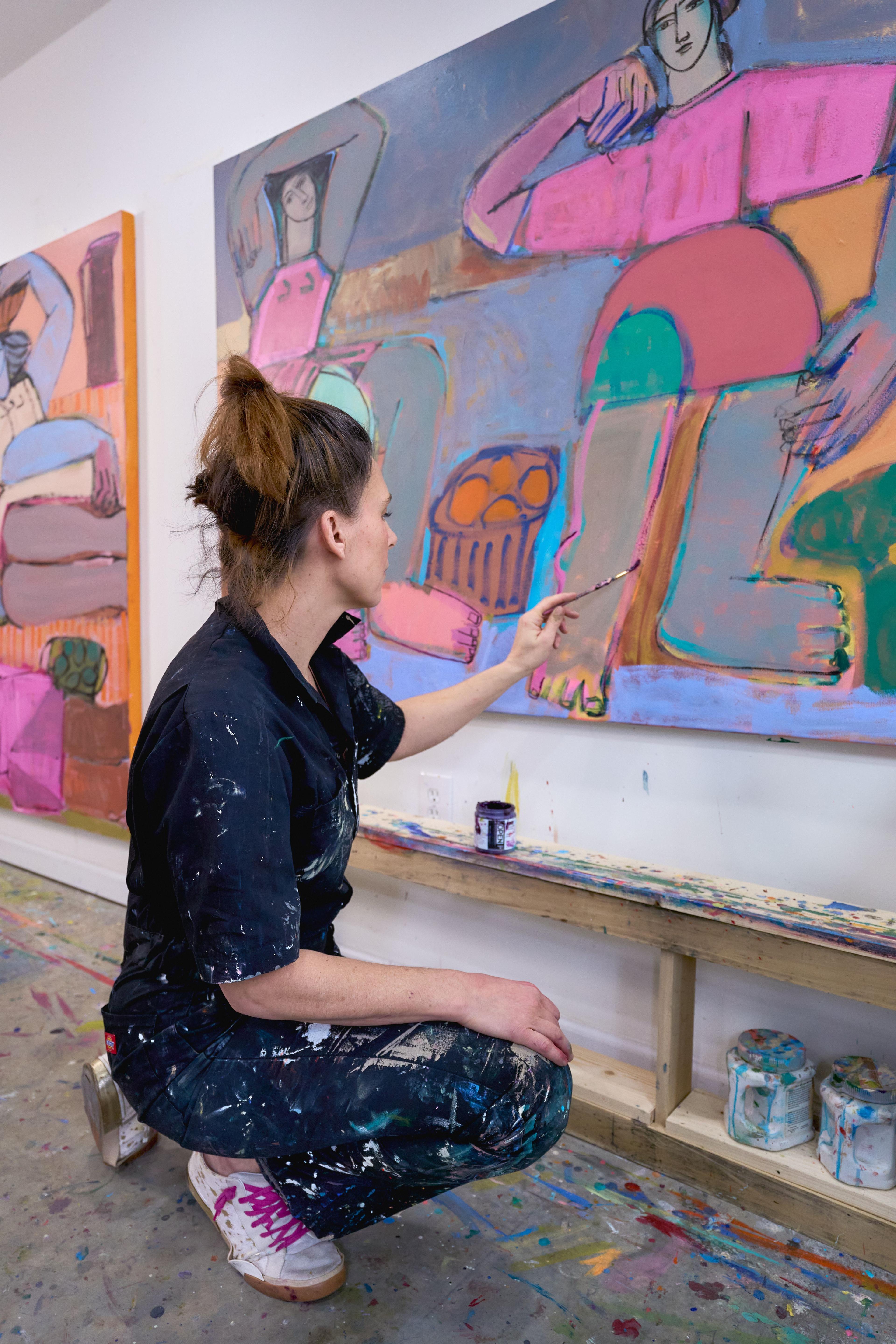
If someone truly understood your work, what would they understand about you?
My hope is that my work is a reflection of something unspoken, a deeper embodiment — and that they understand something about themselves, not me.
What are you reaching toward in your practice that you haven't yet touched?
I am always reaching for more freedom. To be bold and unafraid to go for it. To be surprised and delighted with new outcomes and never settle for a formula.
How do you imagine your work evolving as your life continues to unfold?
I am always dancing between figuration and abstraction. My vision is to push more abstraction in my work. I'll likely have to let something go in my process in order to make that shift.
What are you most proud of at this point in your artistic career?
I am proud of being a full-time artist for four years now and the growth that I have achieved over that time.
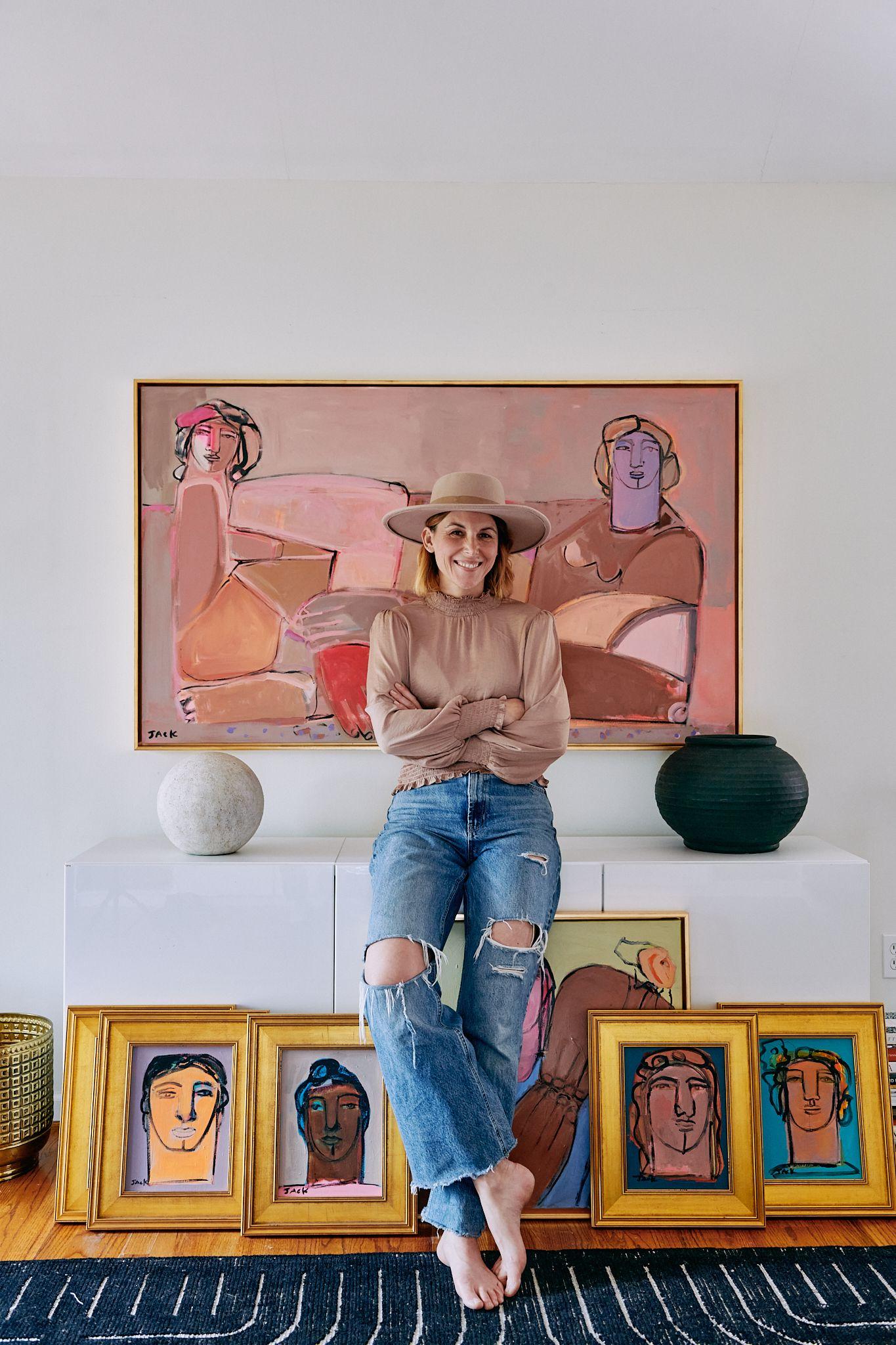
From the conversation
My mother is an artist and fostered creativity at home. She loves beauty and was constantly creating and designing our home, paying attention to details such as having flowers around or setting the table in an aesthetically pleasing way.
I think I'm still trying to get back to the carefree girl in Alabama.
My process is intuitive and abstract. I allow a story to develop as I go along with no pre-planned sketches or ideas. My figures are fictional characters in a story.
I have become more disciplined and committed to creating on a daily basis because I know now how important creating work is to my well-being.
I am always dancing between figuration and abstraction. My vision is to push more abstraction in my work. I'll likely have to let something go in my process in order to make that shift.
Learn more about the artist
Rebecca Jack
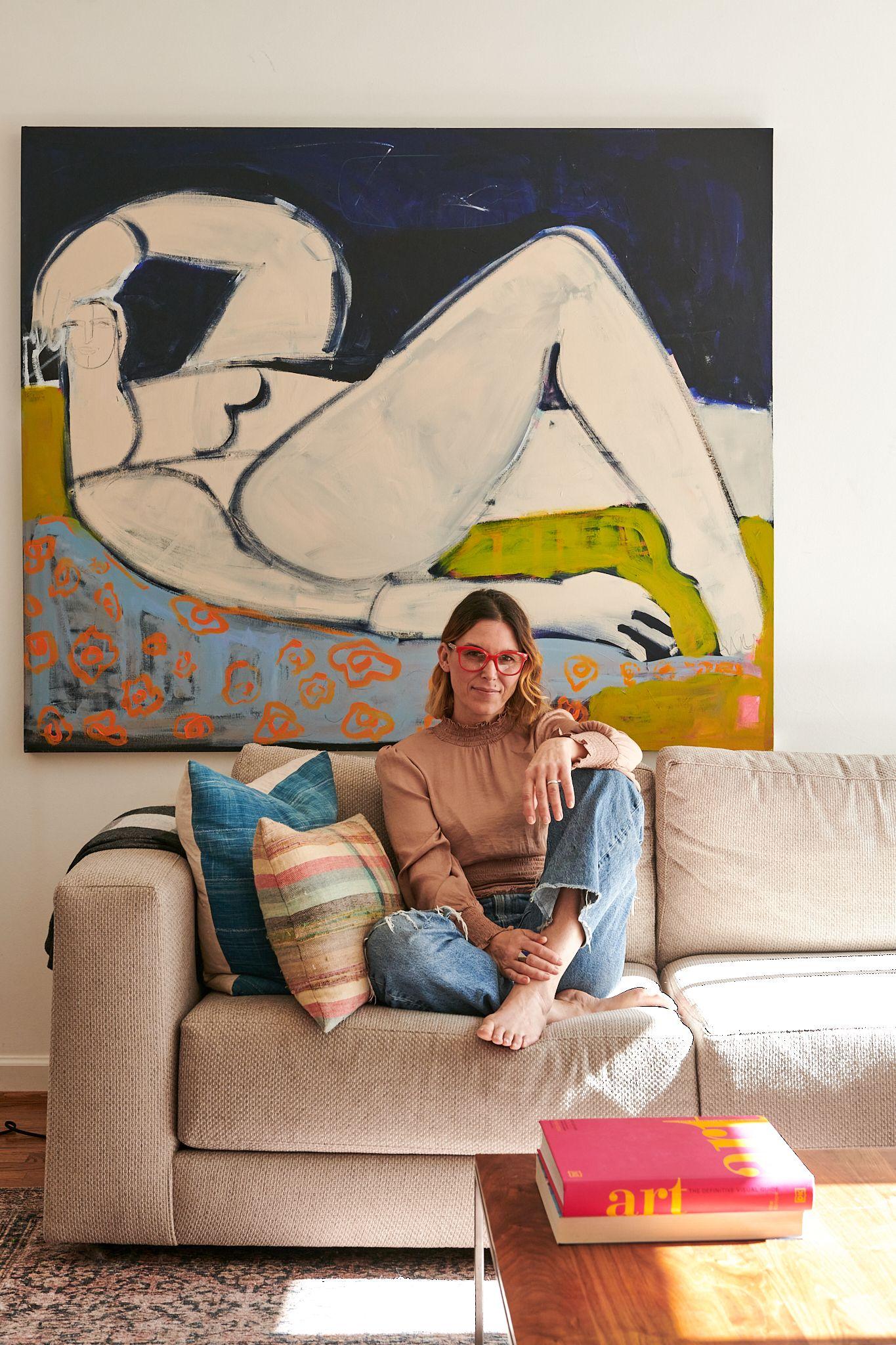
Rebecca Jack, an intuitive painter, creates vibrant, bold works that highlight the beauty of imperfection through visible layering, expressive brushwork and mark-making. Her work abstracts interior and exterior spaces in conjunction with the figure, investigating aspects of self. Jack is a self-described "soul painter."
Stories on making and meaning,
delivered to your inbox.
No spam. Unsubscribe at any time.