Artist Feature — Dan Charbonnet, New Orleans, Louisiana
Removal, Renewal, and the Grid that Emerges
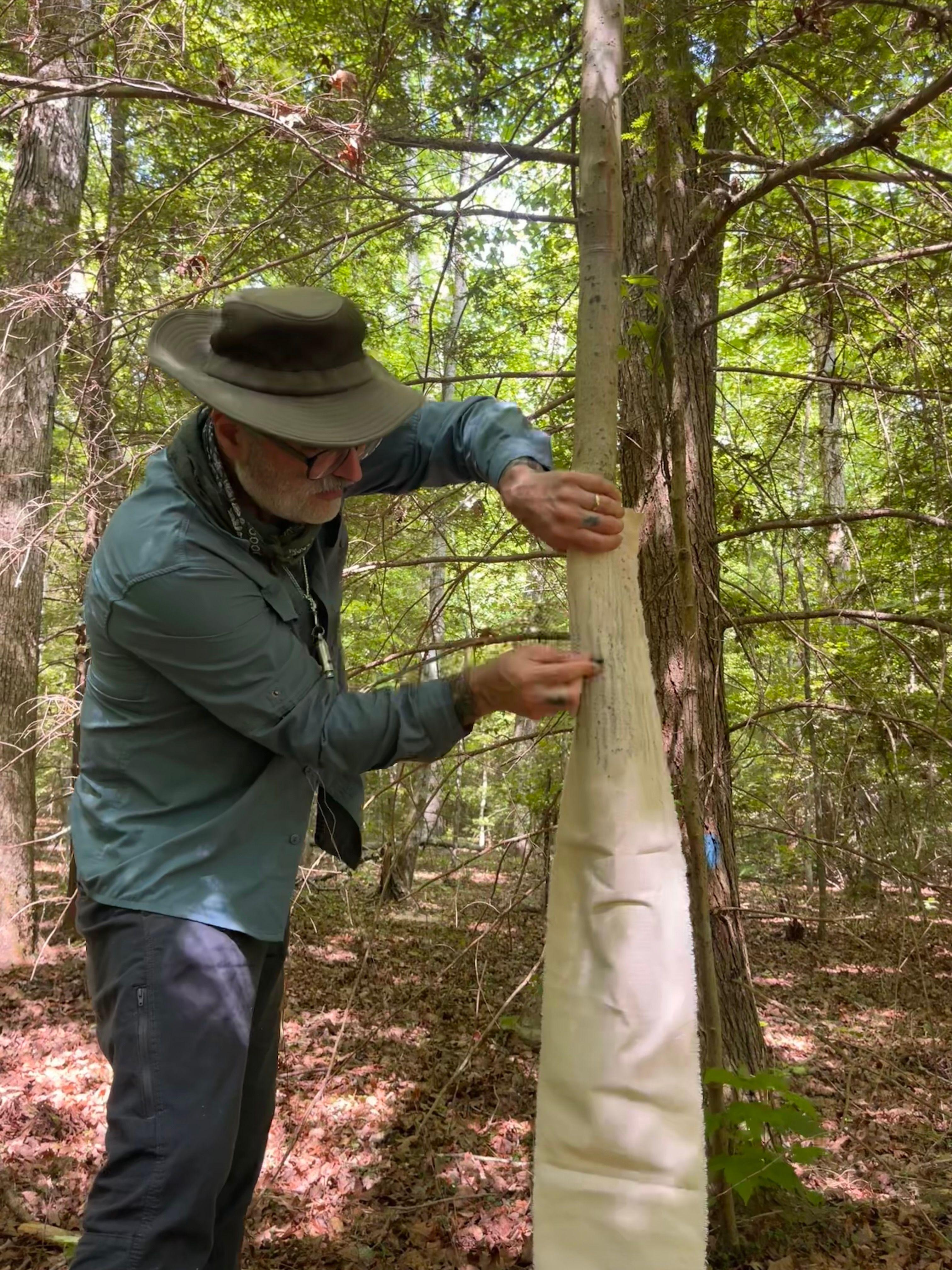
Dan Charbonnet removes invasive trees from New Orleans parks, makes dye from their leaves and bark, and sews the resulting colors into woven, grid-like canvases built on reclaimed plywood. His work holds physical and emotional tension — both of which don't resolve, and that's exactly the point.

Photo credit: Andrew Christopherson
Dan Charbonnet
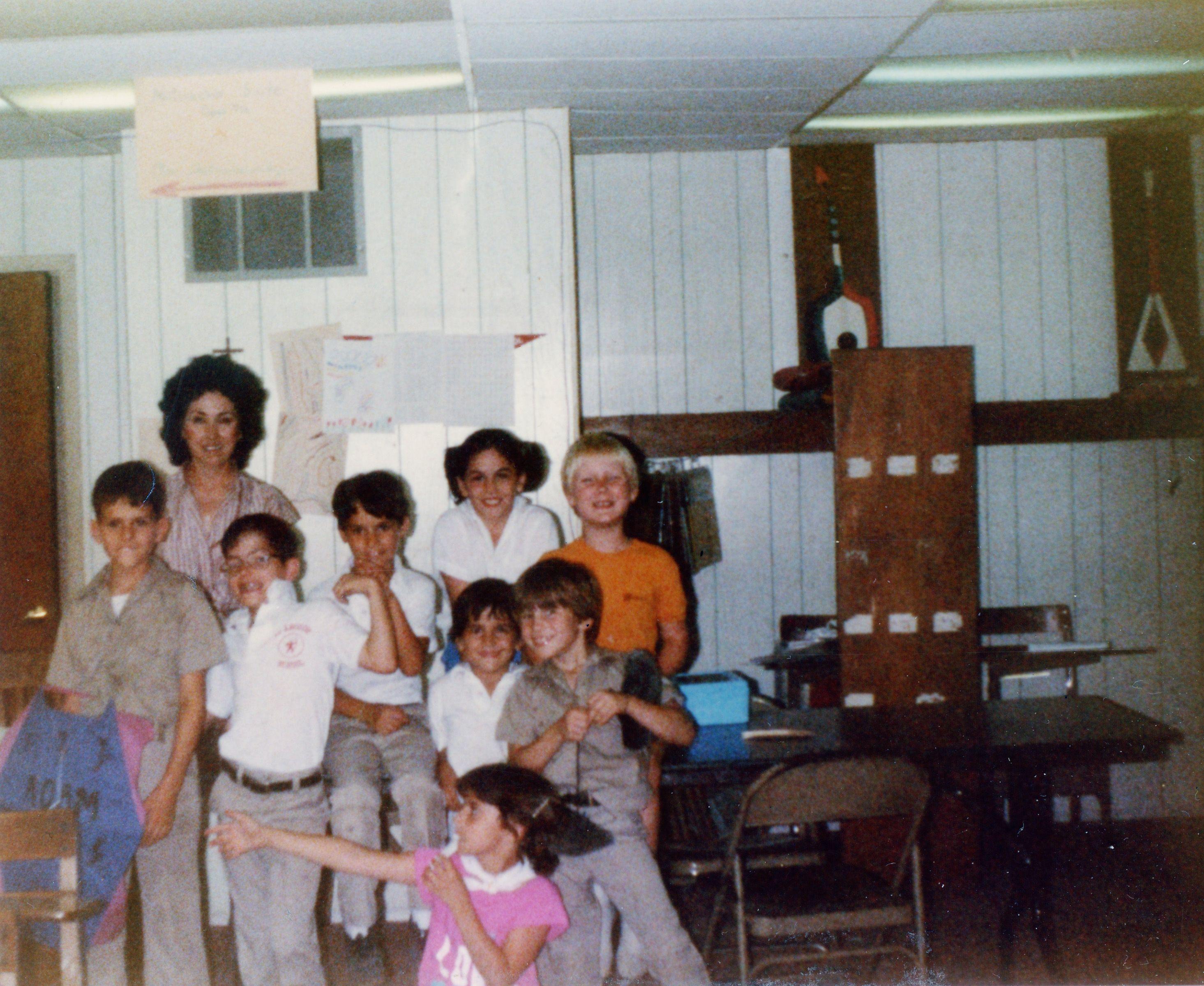
Dan Charbonnet's story as an artist begins in an after-school craft club where a room full of kids made things with paper towel tubes, sticks from the schoolyard, and construction paper for the pure joy of making them. No prompts or instruction. That early sense of freedom, he says, is the foundation of his practice today.
Years later, on a day trip to Marseille, he came across Le Corbusier's La Cité Radieuse, a structure whose béton brut exterior, warm wood, and saturated color intervals struck him in a way he couldn't yet explain. It was just as much of an intrigue then as it is now, leaving him with a lasting impression and teaching him that opposing forces don't have to resolve to coexist. That tension is a form of beauty.
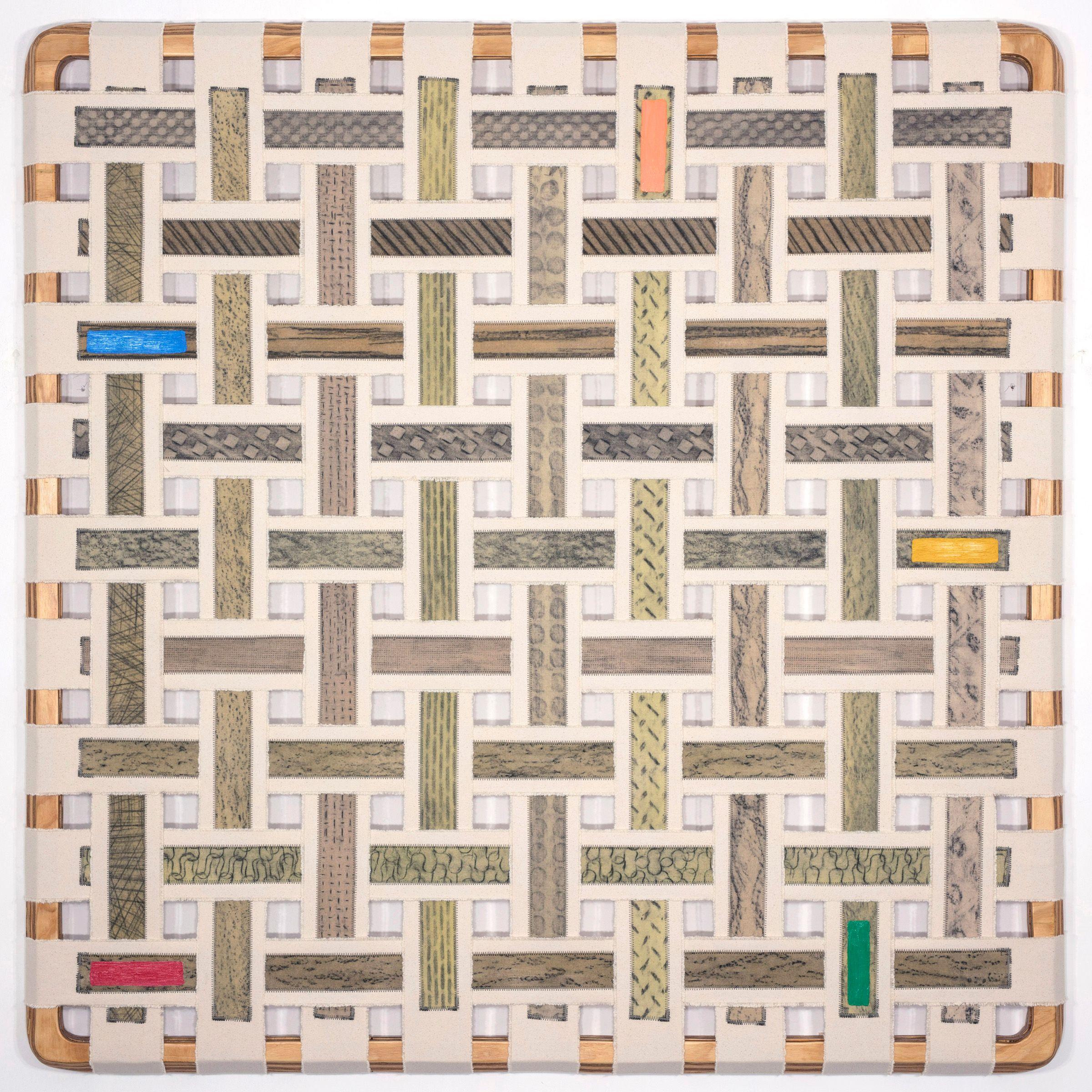
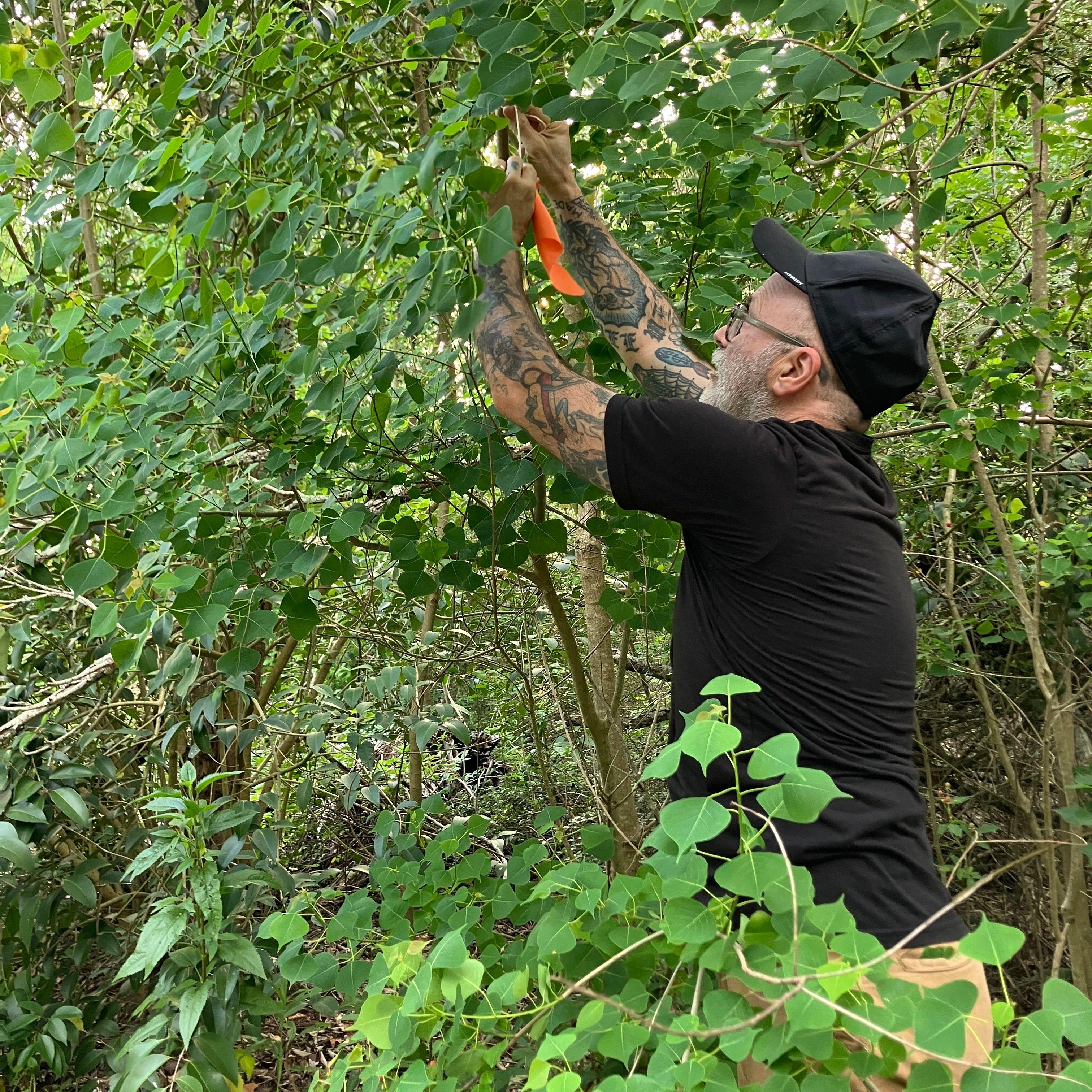
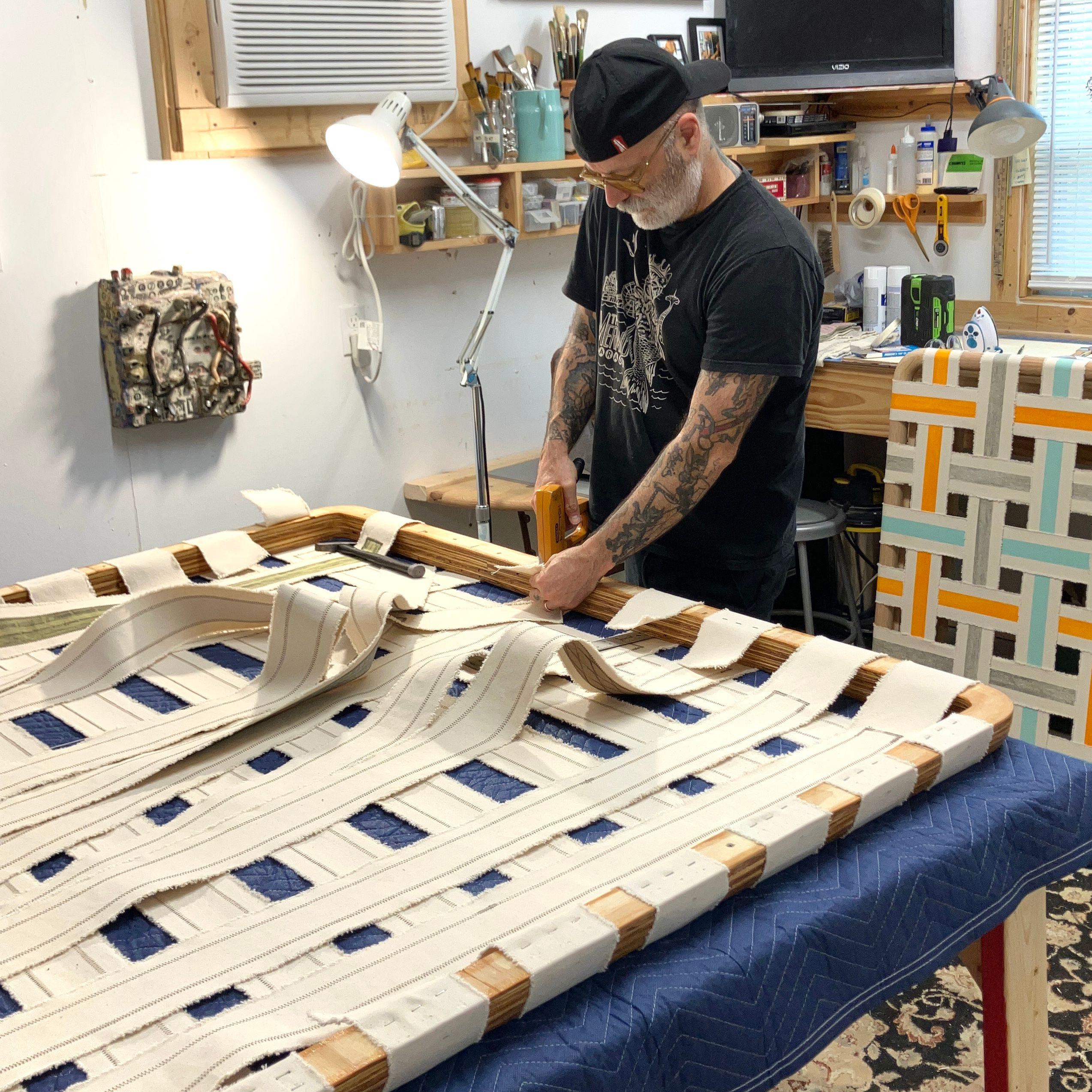
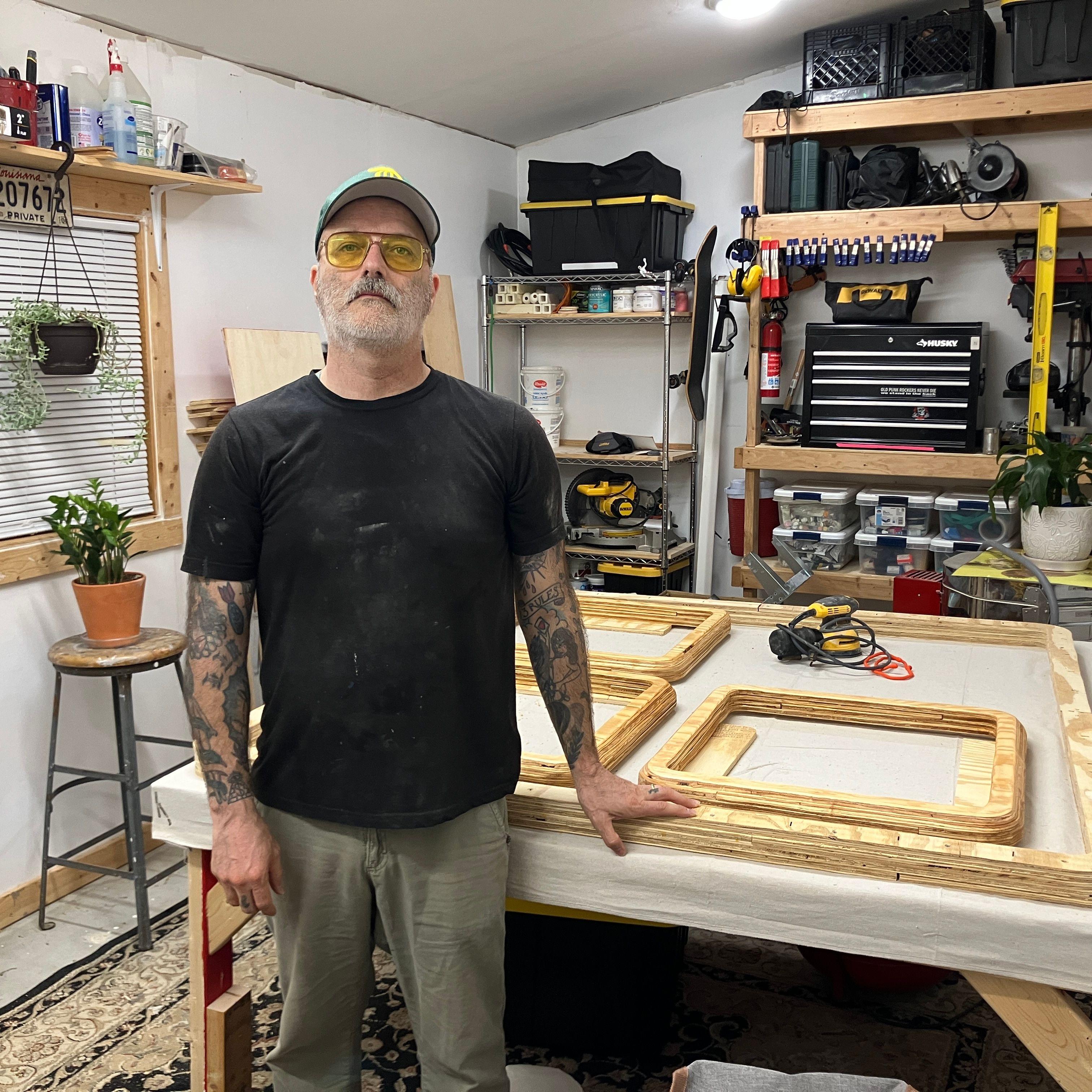
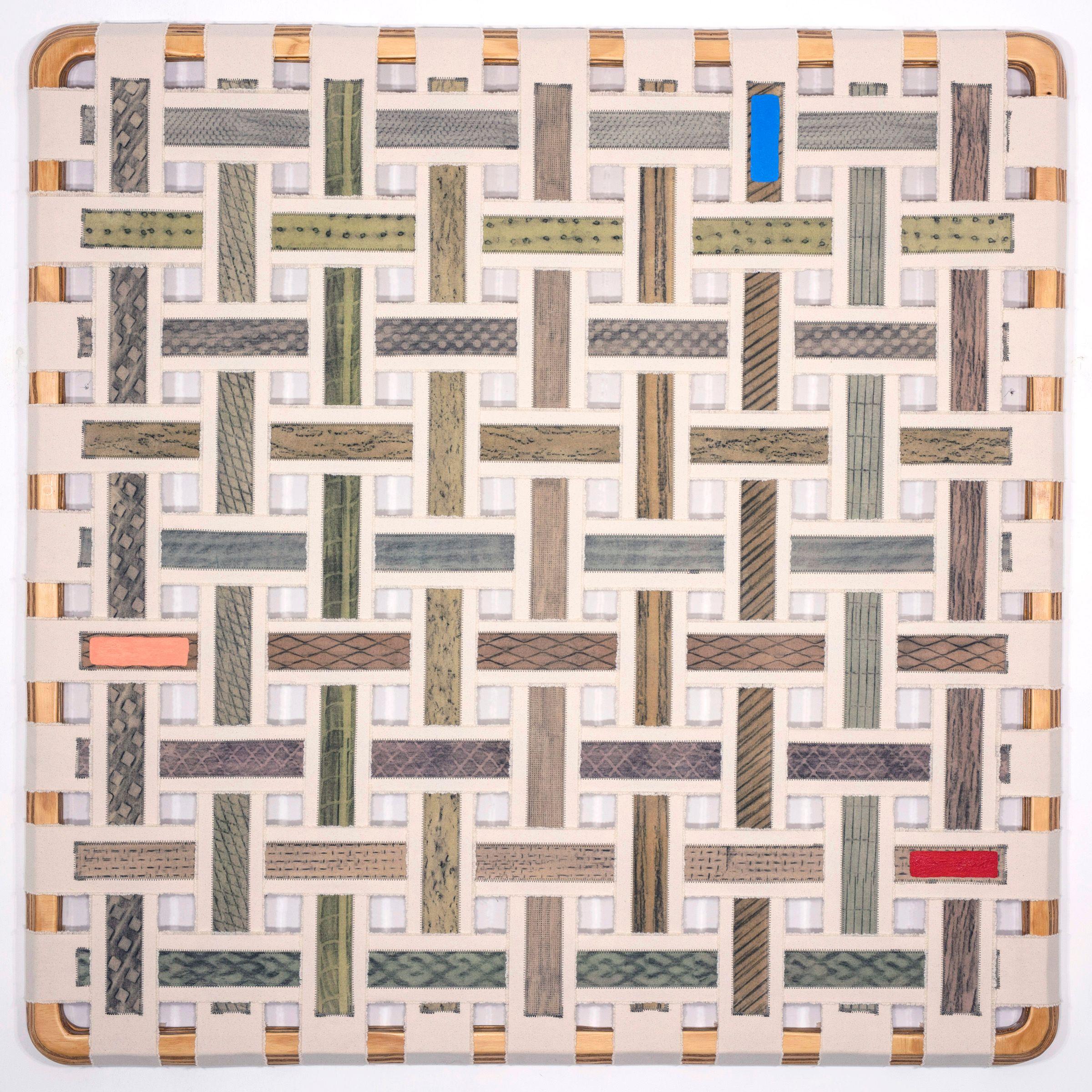
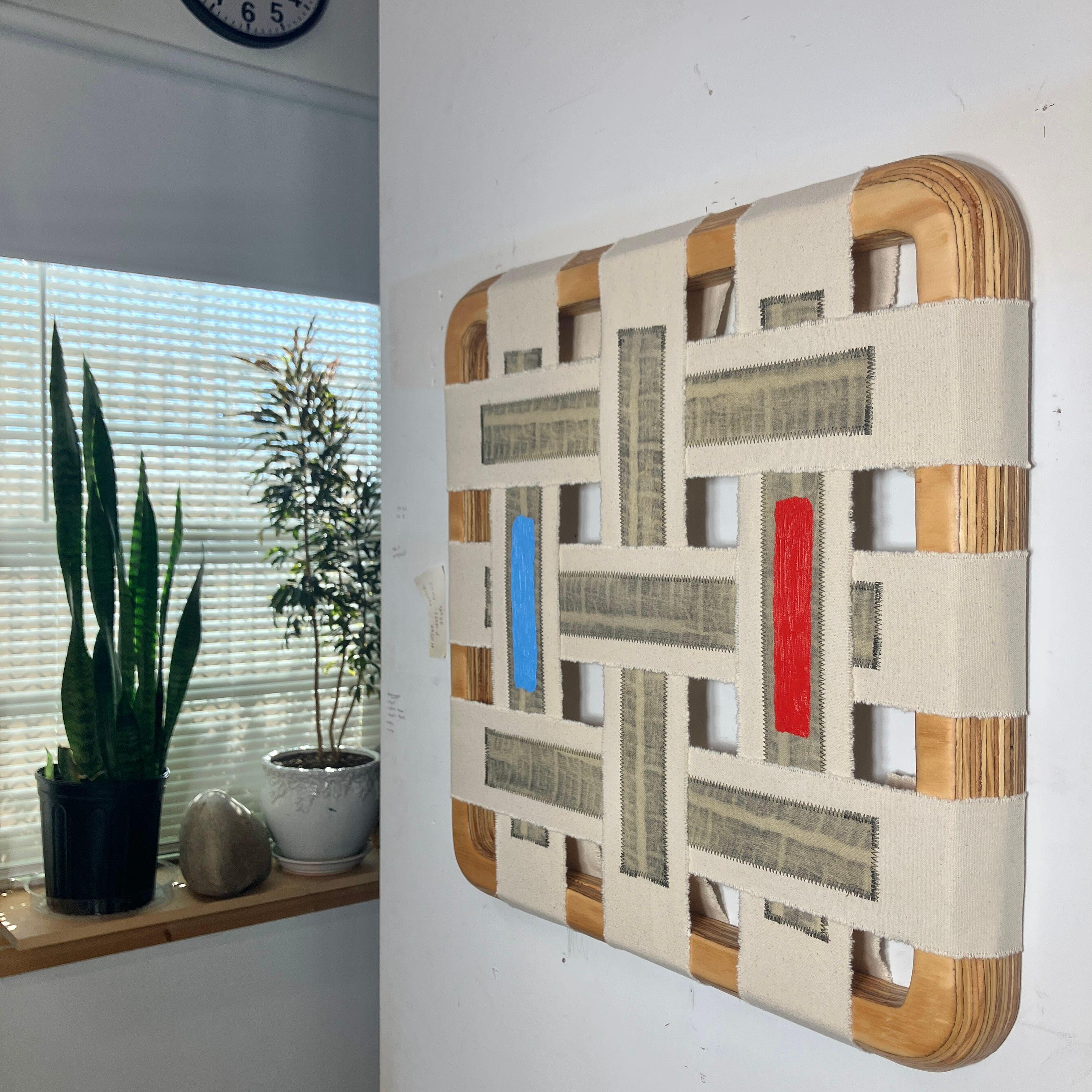
Today, that tension lives in his canvases. Industrial and organic textures sit against each other and the rigid grids he creates are softened by frayed edges. In his Gretna studio — just across the river from New Orleans — he makes densely woven canvases built from materials he gleans from his surroundings. He works with a local park to remove invasive tallow trees, processes their bark into dye, sews pigment-prepared canvas strips onto heavier canvas, and stretches the whole thing over plywood frames he builds by hand.
Lately, this tension is expanding from the physical composition of his work to what he brings of himself to his studio. A new series features saturated patches he describes as almost apparitional, existing on a different plane than the graphite and thread. Because Charbonnet can't visualize in color and doesn't dream in it, his use of color in this series relies on proof that a hue can carry weight entirely independent of personal memory. He moves through his practice reassured that he doesn't need to resolve tensions that arise, in fact, he's decided, that's the point.
In the artist's words
Where do you feel your story as an artist truly begins?
I think my story as an artist truly began in an after school craft club I attended for a couple of years when I was in elementary school. It was my first real art community, a wonderfully informal space that was socially comfortable and not judgmental, where making and play were completely intertwined. We made crafts, and costumes from reclaimed and donated materials such as paper towel tubes, newspapers, plastic cups, markers, and paper plates, we would even use sticks and leaves gathered outdoors. We transformed these sparse, clumsy materials into collages and puppets, or props for reenacting movie scenes. And sometimes we just spent the whole afternoon together dancing, hopped-up on Pop Tarts.
There was so much freedom. We shared and crafted without prompts or instruction, guided entirely by imagination and curiosity. It was making for the pure joy of making, long before creativity became tethered to formality, or technique, or art history.
I realize now how formative that experience was. It taught me that art could be communal, improvisational, and deeply connected to joy and experimentation. Before I ever thought of art as a profession or even a discipline, I understood it as a way of gathering, inventing, and expressing something beyond words. That early sense of freedom and collective imagination still shapes my practice today, grounding my work in material curiosity, and the belief that creativity can connect us to one another.
How have your lived experiences influenced the way you move through the world as an artist?
One such experience that had a profound influence occurred on a day trip to La Cité Radieuse in Marseille nearly twenty years ago, while I was an artist-in-residence at the La Napoule Art Foundation. The experience left a lasting impression on me, though I could not have anticipated then how deeply it would resurface in my work years later. What struck me immediately was the contrasts within the building: the raw presence of the béton brut exterior balanced by the warmth of the wood elements throughout the interior, and the deliberate punctuations of bold color woven throughout the structure. At the time, the correlation to my art wasn't present, but I was instantly aware of how strongly the play of texture, form, and color shaped my mood and perception as I moved through it. Le Corbusier taught me a lesson that day in how opposites can coexist and even strengthen one another.
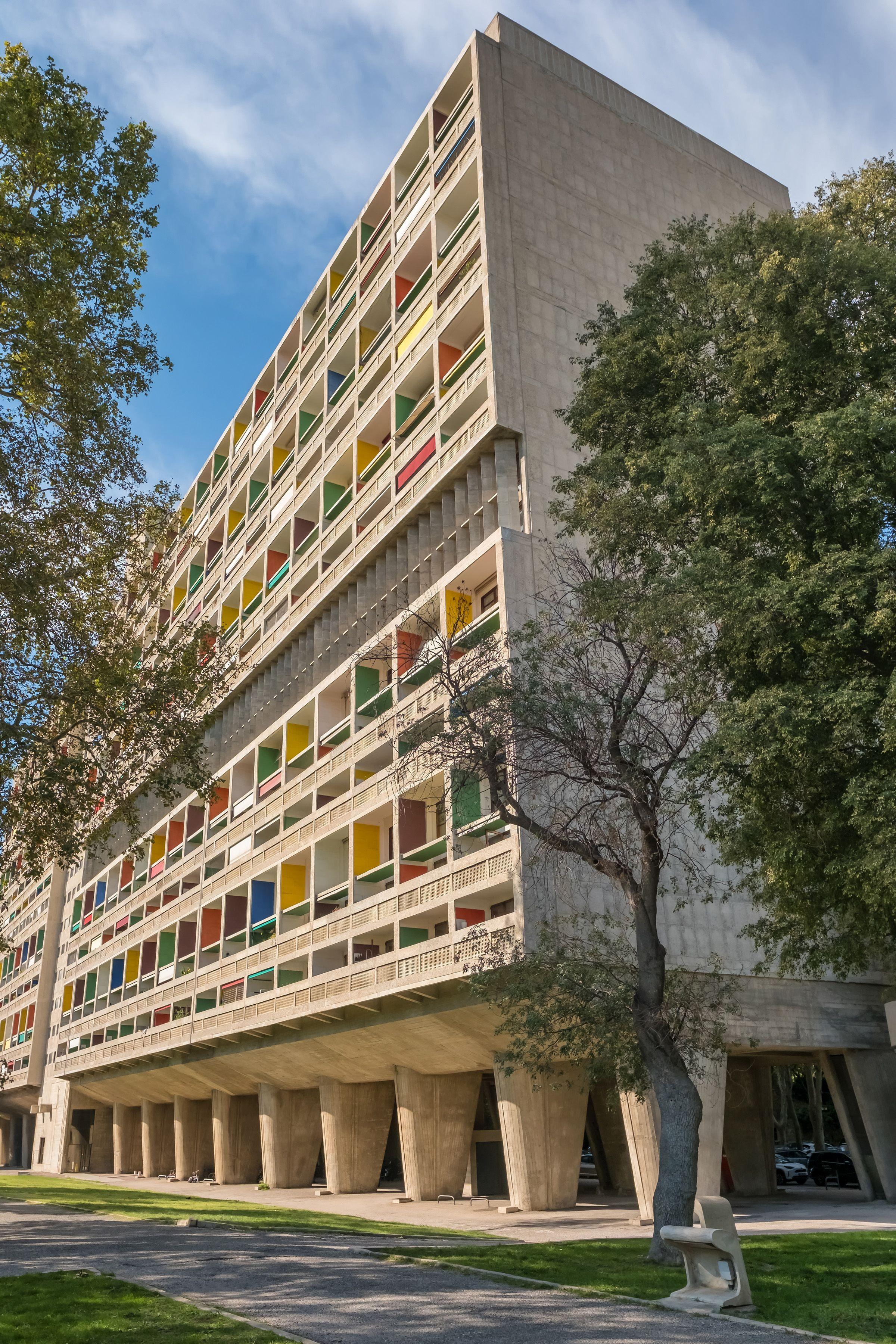
Looking back, it's obvious to see how those lingering memories are manifesting in my studio now. I am often drawn to similar tensions: industrial and organic textures, rigid grids softened by frayed edges, saturated colors complementing the structure. That encounter shaped not only how I see architecture and my own art, but how I understand harmony itself, as something that can emerge through the meeting of seemingly opposing forces.
I am often drawn to similar tensions: industrial and organic textures, rigid grids softened by frayed edges, saturated colors complementing the structure.
— Dan Charbonnet
What materials or techniques feel most like "home" to you, and why?
Foraging and growing materials to make plant-based dyes feels deeply familiar. Some of my fondest memories as a child are of spending time in the garden with my mom or in my grandmother's greenhouse. Those spaces taught me how to pay attention, not just to beauty, but care, maintenance, and the work that keeps a living system healthy. One of the most important, and seemingly never-ending, tasks was weeding. It was just part of tending the garden, making room for beneficial plants and helping the ecosystem thrive. I think about that often now, especially because I work with a local park to remove invasive tallow trees that I then use to make dyes for my work. In a way, it feels like weeding on a much larger scale. There's something meaningful to me in that exchange, where removal becomes renewal, and where caring for a landscape becomes part of the creative process. This process connects my work back to those early experiences and to the positive influence of these incredible women. Their care, patience, and commitment continue to shape how I move through the world and how I approach my art practice.
There's something meaningful to me in that exchange, where removal becomes renewal, and where caring for a landscape becomes part of the creative process.
— Dan Charbonnet
What role does experimentation or play have in your work?
I'm pretty organized in how I think and work in the studio, so my idea of experimentation might look different from others. It tends to feel more like a scientist's approach than a poetic one, with a lot of structure, repetition, and careful testing. But there is a kind of permission I give myself to leave some space for surprise. Without knowing exactly how the elements will resolve, something meaningful can emerge. That might mean trying different dye combinations, layering graphite rubbings in unexpected ways, or trying out new frame designs. Some of those moments stay in the work, others fall away, but they all contribute to a larger sense of direction. Play, for me, is connected to intuition and responsiveness, especially when working with materials that already carry their own histories and behaviors.
My idea of experimentation might look different from others. It tends to feel more like a scientist's approach than a poetic one.
— Dan Charbonnet
What do you think your work is teaching you about yourself?
I think my work is teaching me to get more comfortable with uncertainty, especially around things I can feel deeply but can't fully explain. Lately, that's been showing up in a challenging new series that features these saturated patches of color. I often think of color as something almost separate from the physical world, more like an apparition. I can't really visualize in color and I don't dream in color, so there's something mysterious to me about trying to recreate a hue that carries emotional weight. The processes I use in my work, like recording textures, sewing, and woodworking, all feel tangible and grounded, but the patches of intense color seem to exist on a different plane. It can feel like two separate conversations are happening within the same composition.
My wife picked up on my strange relationship to color and gifted me The Secret Lives of Color by Kassia St. Clair. I find the anecdotes and histories that accompany the colors featured in the book to be both fascinating and comforting. There's something reassuring in being reminded that colors carry their own narrative and have impact, even outside of our personal memories. It makes me feel a little less alone in trying to understand why certain hues can resonate so strongly for me.
What I'm realizing is how drawn I am to things I can't quite pin down. I find myself painstakingly chasing colors that spark a strong response, even when I can't fully explain why. I think it has something to do with nostalgia, though the colors aren't clearly tied to any one memory. That uncertainty can be frustrating, but it's also what keeps me invested. Mostly, I think the work is teaching me to trust feeling, even when understanding lags behind. Maybe some of the most meaningful parts of our experience aren't the things we can clearly remember or explain, but the things that stay just out of reach and still manage to move us.
There's something reassuring in being reminded that colors carry their own narrative and have impact, even outside of our personal memories.
— Dan Charbonnet
Maybe some of the most meaningful parts of our experience aren't the things we can clearly remember or explain, but the things that stay just out of reach and still manage to move us.
— Dan Charbonnet
How do you imagine your work evolving as your life continues to unfold?
Society is changing so rapidly, and as my life continues to unfold I often think about how to navigate that without losing my own pace or perspective. Sometimes I picture myself a bit like Monsieur Hulot wandering through the city in Tati's masterpiece Playtime. Moving slightly out of step, but fully present, through a landscape of competing textures and nuanced interactions trying to make sense of it all with a purpose that's entirely my own. There's something about that balance of observation and persistence that feels familiar to me. I can imagine the work continuing to hold more of that tension, where discord somehow becomes harmony, and where sentiment and material reality jockey for attention in a kind of awkward coexistence. I like the idea of the work being both attentive and slightly amused, grounded in memory but still stubbornly modern. Maybe even a bit blissfully oblivious at times. I truly hope the work continues to reflect my curiosity and a willingness to let complexity sit without needing to resolve it too quickly.
From the conversation
Before I ever thought of art as a profession or even a discipline, I understood it as a way of gathering, inventing, and expressing something beyond words.
I often think of color as something almost separate from the physical world, more like an apparition.
Le Corbusier taught me a lesson that day in how opposites can coexist and even strengthen one another.
Mostly, I think the work is teaching me to trust feeling, even when understanding lags behind.
I like the idea of the work being both attentive and slightly amused, grounded in memory but still stubbornly modern.
Learn more about the artist
Dan Charbonnet
Dan Charbonnet is an artist, educator, and gardener based in Gretna, Louisiana. Raised between New Orleans and the surrounding bayou, his work draws from the region's rhythms, where natural and built environments intersect. Working across painting and constructed surfaces, he develops woven, grid-like compositions that translate observation into systems of repetition and variation. He studied at the University of New Orleans, where he developed a multidisciplinary practice rooted in drawing and painting, and he now teaches these subjects at a local community college. Charbonnet is a member of the Good Children artist collective in New Orleans and has recently exhibited at the University of Dallas.
Stories on making and meaning,
delivered to your inbox.
No spam. Unsubscribe at any time.