Artist Feature — Brandon V. Lewis, Baton Rouge, Louisiana
Rendered from a Lineage of Belief
For Brandon V. Lewis, figurative painting is a testimony of community, faith, and a grandmother who prayed over his gift before he knew what to do with it.

Brandon V. Lewis
The preschool take-home assignment was to draw a bumblebee. Nobody in Brandon V. Lewis’ house knew how to draw. His mother and grandparents encouraged him to just try, and what resulted was something remarkable, especially for a three year old. From that day forward Lewis’ family spoke about his talent the way Southern families speak about a calling; with faith and intention, and the full weight of their belief behind it.
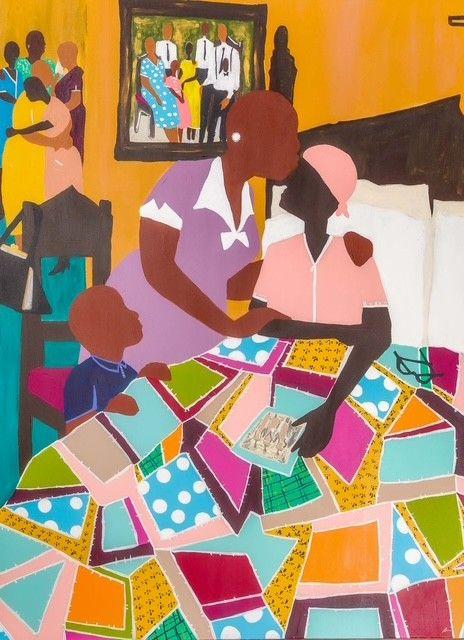
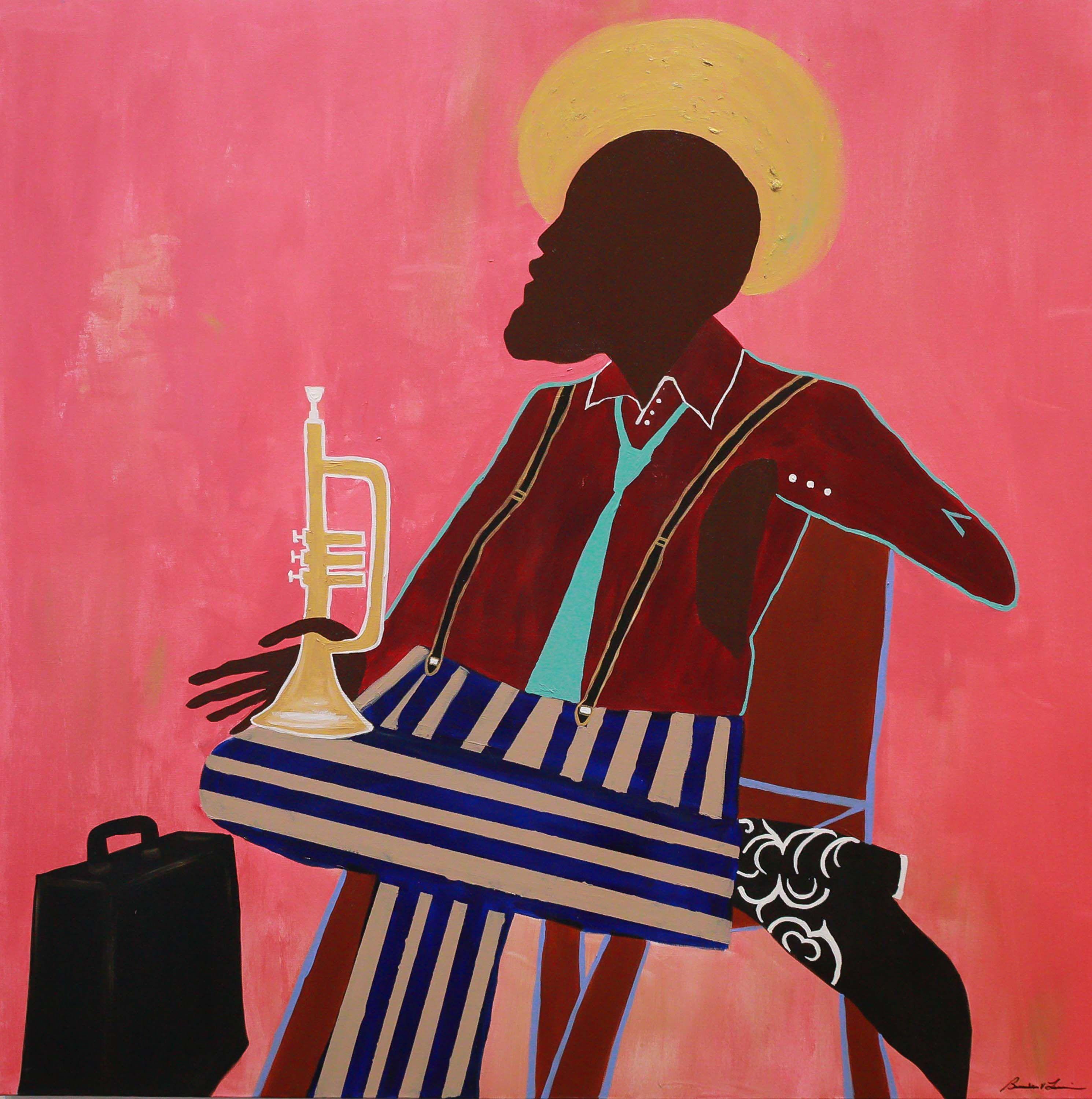
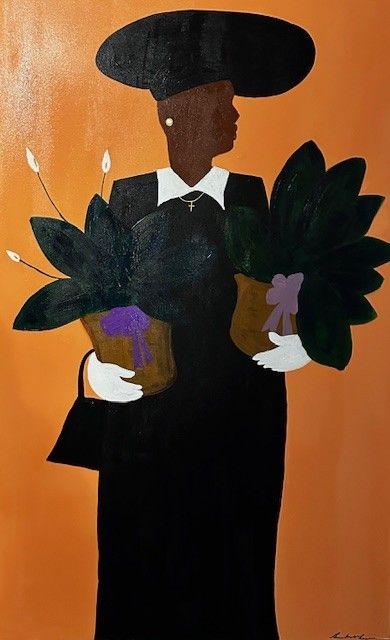
Lewis grew up in a multigenerational household in Louisiana where great-grandmothers, great-aunts, and uncles told stories that were also instructions for living. Where love, as he puts it, was an action word, not a sentiment. That formation is the whole infrastructure of his figurative paintings, which render the richness of Black Southern life in acrylic and, occasionally, in fabric from clothes of the people he has lost.
A pivot came in Lewis’ artwork when he read a 1996 journal entry — a prayer — from his deceased grandmother. At this moment, Lewis understood that pressing forward with his art was no longer a choice but an obligation. He understands art-making as a kind of immortality, and is honored to practice his craft everyday.
Where do you feel your story as an artist truly begins?
My journey as an artist began at the age of three, with a bumblebee. In preschool, we were given an assignment: our parents were to draw a bumblebee, and we were to color it. But in my home, no one knew how to draw, so they simply told me to “just try.”
In that small, ordinary moment, something extraordinary happened. As I put pencil to paper, my mother and grandparents realized I had a natural gift. From that point on, they nurtured it, speaking life, encouragement, and possibility into what would become not just a talent, but a calling.
What early experiences or environments shaped the way you see the world?
Growing up in a multigenerational household, oral history was a constant presence in my daily life. From my great grandmother to my great aunts and uncles, I was surrounded by a rich tradition of storytelling that shaped and grounded me. Through their stories and the way they lived, I learned the importance of community and that love is an action word. It was not just what they said, but how they showed up every day that formed my values. By their example, I have been deeply shaped.
Is there a moment or chapter in your life that changed your relationship to making?
A defining chapter in my relationship with making began when I returned home from college and became a caregiver for my maternal grandmother after she was diagnosed with dementia. Even as her memory faded, she still found space to ask about my work, holding on to that connection in a way that stayed with me.
After she passed, I discovered her journal. In an entry from 1996, she wrote, “God, you have given my child a gift, please allow it to make room for him.” Reading those words shifted something in me. In that moment, I understood that I had no choice but to press forward with my work. What I create now is rooted in that prayer. My pieces are, in many ways, an extension of her faith and belief in me.
How does your background or community show up in your practice, even in subtle ways?
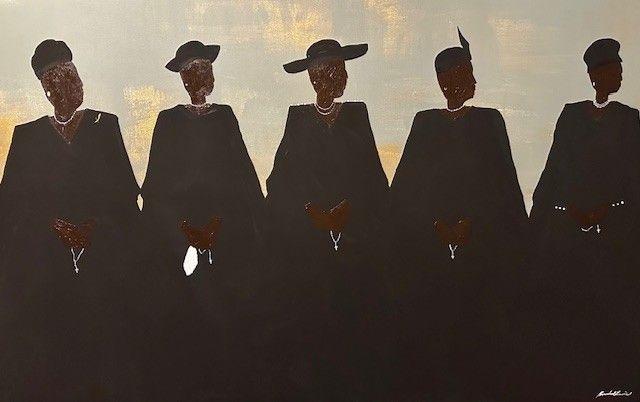
Community shows up in my practice every day. The people in my church, my friends, and of course my family quite literally shape the silhouettes found in my work. The richness of their skin tones, the forms of their bodies, and the vibrant ways they express themselves all live within my collections. Through them, my work becomes a reflection of the beauty, complexity, and spirit of the community that continues to pour into me.
What does your process look like — slow, intuitive, research-driven, ritualistic?
My process begins in reflection. I sit with the stories I have been told, the scenes I have witnessed, the Sunday mornings, the Saturday funerals, and the full range of joy and sorrow that my people have experienced. I allow myself to dwell in those moments until the images begin to surface. The sketches come first, followed by the paintings. Each piece becomes a retelling, an honoring of the stories that have shaped me.
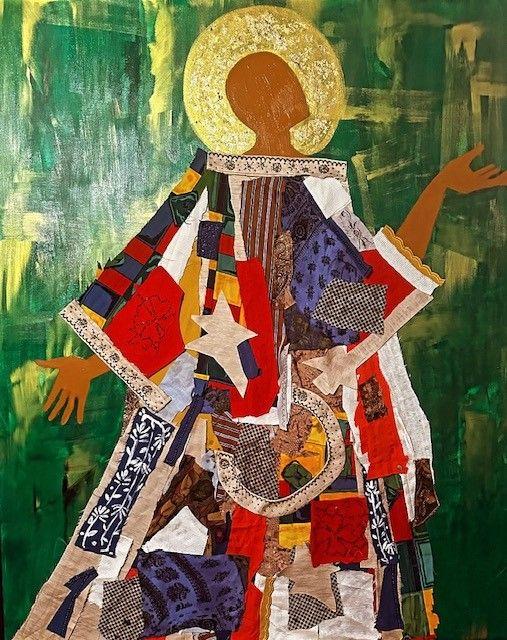
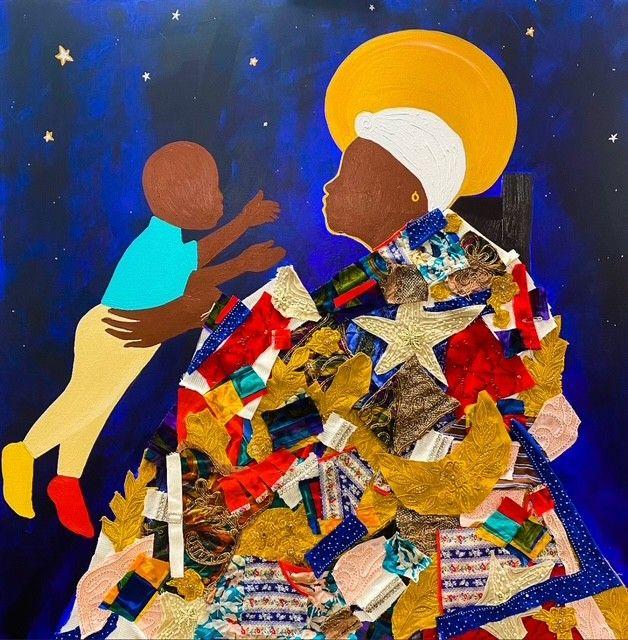
In recent years, I have experimented with incorporating fabric and paper into my work. This shift began when I found myself holding onto a bag of my grandparents’ clothes that I could not bring myself to part with. Instead of letting them go, I chose to integrate them into a piece titled Before I Say Farewell, which depicts a grandmother embracing her grandson before she transitions.
Working with that fabric became a deeply spiritual experience. It was more than a material choice; it was an act of remembrance and reverence. In using those garments, I found a way to keep my grandparents close, allowing their presence to live within the work. It became my way of honoring my ancestors, stitching their memory into every layer.
It was more than a material choice; it was an act of remembrance and reverence. It became my way of honoring my ancestors, stitching their memory into every layer.
— Brandon V. Lewis
What do you hope people feel or understand when they encounter your work?
My hope is that when people encounter my work, they feel seen. I want them to be reminded of their own stories and inspired to celebrate their heritage. More than anything, I hope they can hear my grandmother’s prayers in their hearts and experience that quiet, affirming “amen” moment in the presence of the work.
If someone truly understood your work, what would they understand about you?
They would understand that I am committed to telling stories and telling them well.
I am committed to telling stories and telling them well.
— Brandon V. Lewis
How do you imagine your work evolving as your life continues to unfold?
As my life continues to unfold, I have no shadow of a doubt that my work will grow alongside the stories that inspire it. With each new encounter, place, milestone, and challenge, the work will evolve as a reflection of those lived experiences. There is no period at the end of the story I am telling, only a comma. It is a story that will continue, carried forward through the work for generations to come.
There is no period at the end of the story I am telling, only a comma. It is a story that will continue, carried forward through the work for generations to come.
— Brandon V. Lewis
What are you most proud of at this point in your artistic career?
I am most proud of the reach my work has had with young people. I have been fortunate to share my work and the inspirations behind it with emerging generations in meaningful ways. I understand artmaking as a gift that offers the maker a kind of immortality through the work itself. Because of that, having young minds sit with the work, engage it, and ask questions is a true treasure to me.
From the conversation
- From my great grandmother to my great aunts and uncles, I was surrounded by a rich tradition of storytelling that shaped and grounded me.
- I hope they can hear my grandmother’s prayers in their hearts and experience that quiet, affirming “amen” moment in the presence of the work.
- My process begins in reflection. I sit with the stories I have been told, the scenes I have witnessed, the Sunday mornings, the Saturday funerals, and the full range of joy and sorrow that my people have experienced. I allow myself to dwell in those moments until the images begin to surface.
- The people in my church, my friends, and of course my family quite literally shape the silhouettes found in my work.
- God, you have given my child a gift, please allow it to make room for him.
Learn more about the artist
Brandon V. Lewis
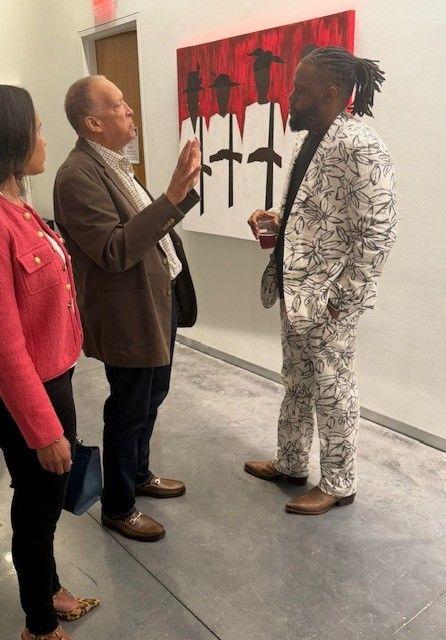
Brandon V. Lewis is a Baton Rouge, Louisiana–based visual artist whose work explores memory, faith, family, and the lived experiences of Black communities in the South. Working primarily in acrylic with elements of mixed media, Lewis creates figurative compositions that are rich with color, rhythm, and emotional resonance. His paintings often draw from personal narratives while speaking to broader themes of resilience, spirituality, and collective joy. Deeply influenced by Southern culture, gospel traditions, and the visual language of everyday life, Lewis approaches painting as both storytelling and testimony. His work invites viewers to pause, reflect, and recognize themselves within the scenes he presents.
Stories on making and meaning,
delivered to your inbox.
No spam. Unsubscribe at any time.